

Marcheluzzo revamps La Moderna's production plant
By opting for plant revamping rather than complete replacement, La Moderna has upgraded its production process with Marcheluzzo's technological solutions, improving efficiency, automation and sustainability.
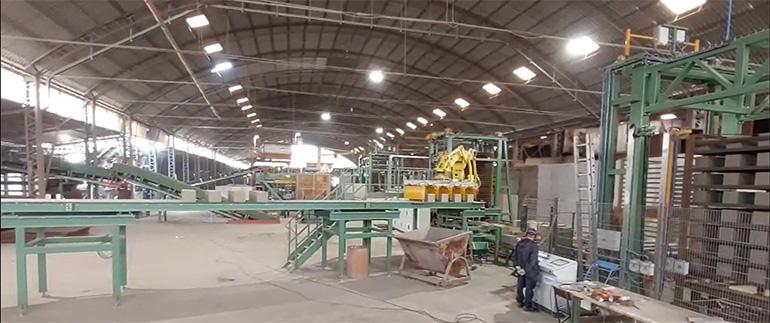
Modernising existing plants, rather than replacing them entirely, is becoming an increasingly common trend in the Italian heavy clay industry. One company that has embraced this approach is La Moderna, a historic Sicilian brickworks located in the province of Messina which has launched a major investment programme to upgrade an ageing production line. Led by Cosimo La Fauci and his son Tonino, the company has once again chosen to work with Marcheluzzo on a complex modernisation project, further strengthening a longstanding partnership built on the proven reliability of previously installed technological solutions.
A project centred around the dryer
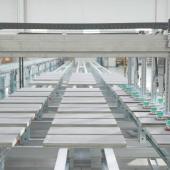
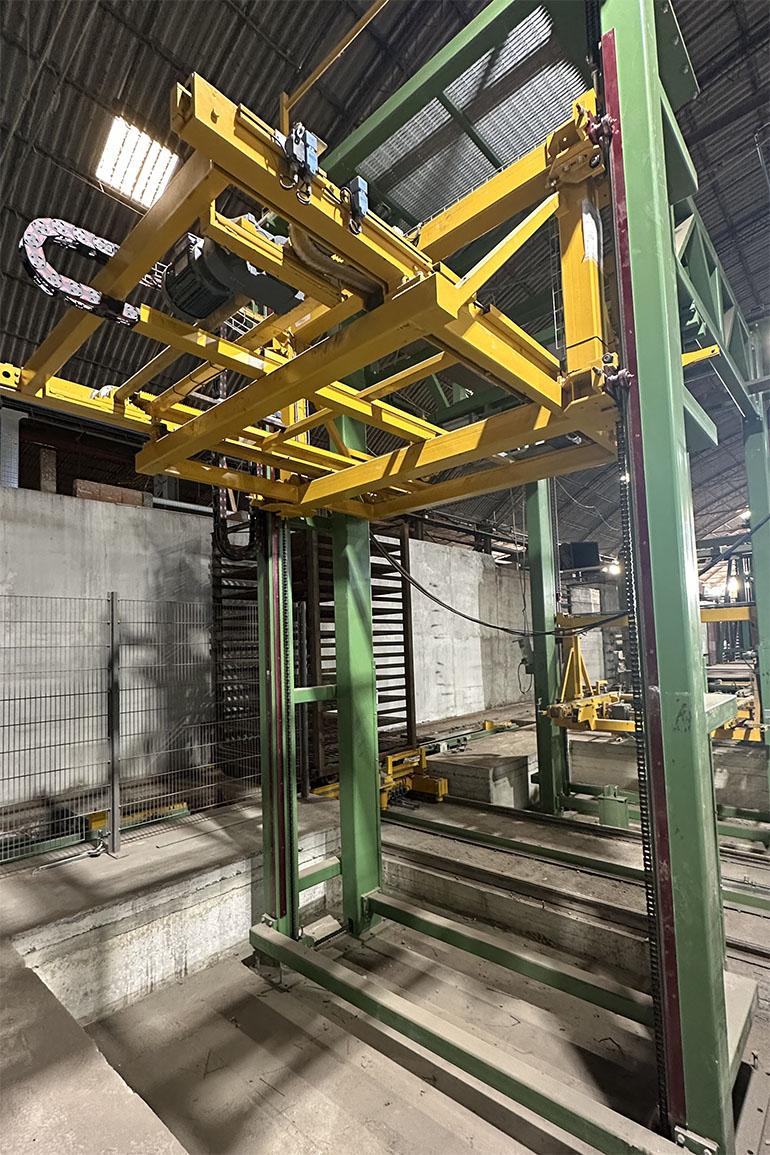
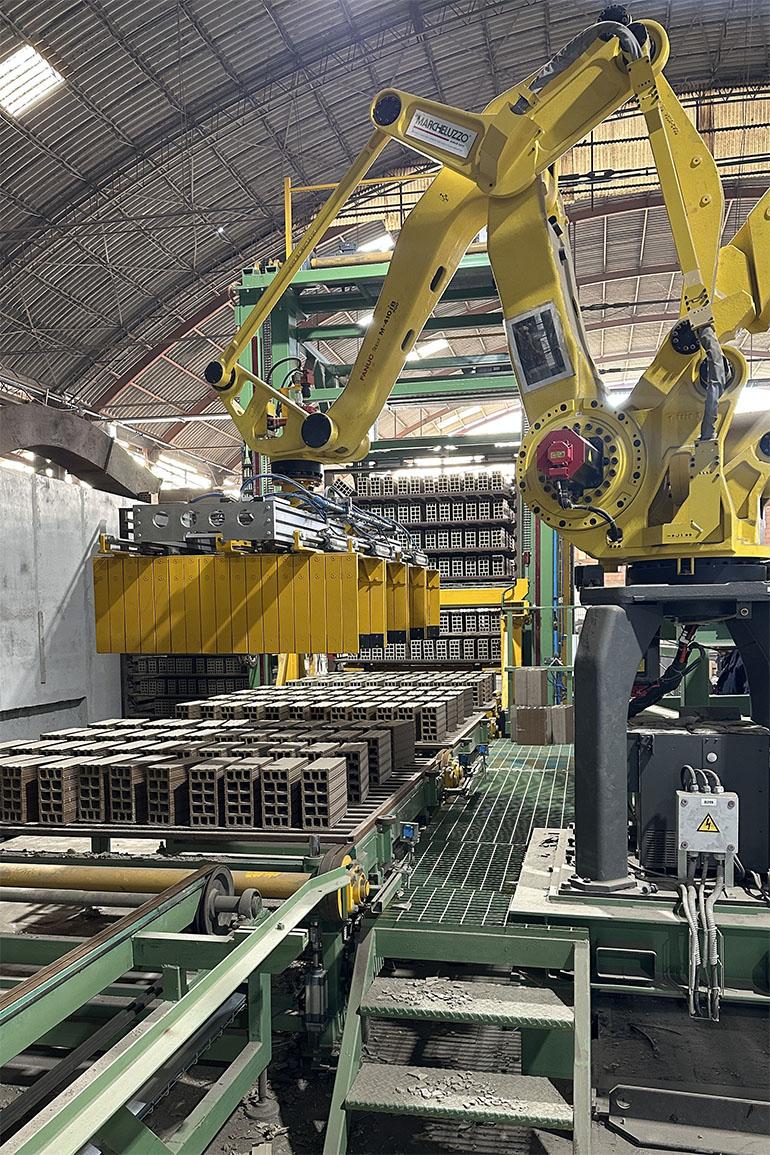
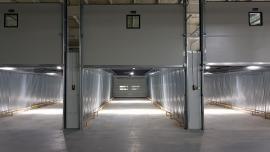
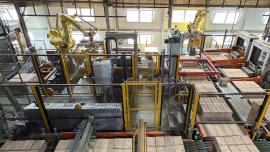
The first phase of the project involved upgrading a long-established production line equipped with a high-air-volume dryer, a solution traditionally adopted in Mediterranean regions where favourable climatic conditions allow for effective use of sunlight and natural ventilation during the drying phase. The engineering challenge was to integrate new technologies with the existing structures, minimising modifications to parts that were still efficient and thereby optimising the investment-to-performance ratio. Downstream of the extruder, a new column pre-cutting system was installed together with a completely redesigned dryer pallet handling system for both loading and unloading operations. The dried material is repositioned and automatically transferred via robotic systems to the setting area, where it is prepared for loading onto the kiln cars. The entire plant was designed to increase the level of automation, improve production continuity and ensure highly efficient management of material flows.
Kiln upgrading: energy efficiency and process control
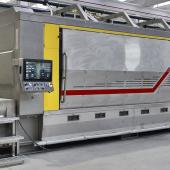
Alongside the new production line, La Moderna also focused on the firing kiln, commissioning Marcheluzzo to carry out a comprehensive upgrade project. The aim was to adapt the thermal process to the increased production capacity while also improving firing uniformity, energy consumption and heat recovery.
The starting point for the project was the owner’s extensive experience in raw material management and the firing process. Based on these guidelines, Marcheluzzo exploit its own expertise to upgrade the entire length of the kiln, completely redesigning the thermal cycle and modifying the preheating, firing and cooling zones.
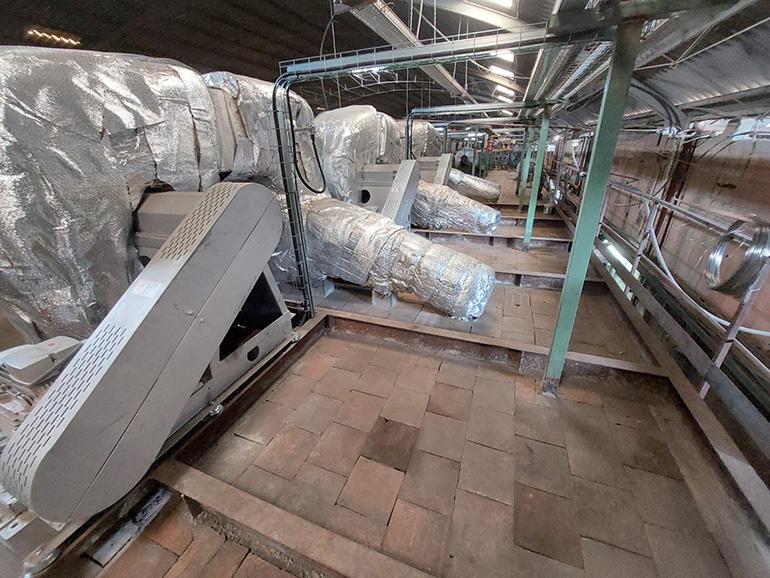
High-pressure forced recirculation systems were introduced in the preheating zone to ensure a uniform temperature distribution between 200°C and 400°C. This solution is tailored specifically to the characteristics of the clays used by the company, which have a particularly fine particle size and are therefore highly sensitive to temperature increases. Forced recirculation of the same air, re-injected at high pressure, homogenises temperatures across the entire cross-section, ensuring that suitable temperatures are established as soon as the material enters the kiln.
The subsequent installation of six new high-velocity side burners improves efficiency in the temperature range up to approximately 650°C, preparing the material for the pre-firing stage and subsequently for the actual firing process through a more uniform and rational distribution of energy.
The firing zone was also completely redesigned, with the preparation system and eight firing groups repositioned to ensure a smoother, more continuous thermal curve. At the same time, three new rapid cooling groups and three high-temperature heat recovery systems were installed, enabling products to be cooled uniformly according to the kiln car feed rate.
Special attention was devoted to the final stage of the process. The existing low-performance cooling system was completely redesigned and integrated with a new heat recovery room that serves to collect the energy recovered during product cooling and channel it to the dryers, eliminating the need for dedicated heat generators.
Rounding off the project is a new control cabin equipped with an electrical panel and an automation system for integrated management of the entire kiln, enabling operators to monitor and control the process completely automatically.

Did you find this article useful?
Join the CWW community to receive the most important news from the global ceramic industry every two weeks





Related articles

Recent articles
Marcheluzzo revamps La Moderna's production plant

Ceramics China: Next appointment in June 2027



Main topics

Read more