

Efficiency and sustainability: heating the milling water
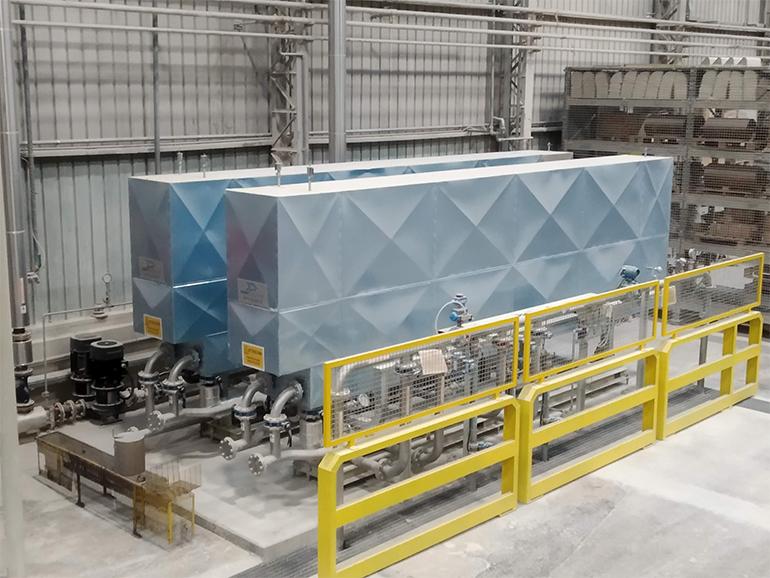
Poppi Clementino presents a heat recovery system capable of heating the water used in grinding mills, an innovation that combines production efficiency with environmental sustainability.
Efforts to reduce energy consumption in the ceramic industry are increasingly focusing on upstream stages of the production process. For example, temperature control during the raw material preparation phase is emerging as a strategic lever for optimising both operating costs and finished product quality. In this context, Poppi Clementino offers an advanced heat recovery system capable of heating the water used in grinding mills, an innovation that combines production efficiency with environmental sustainability.
Characteristics and advantages of the system
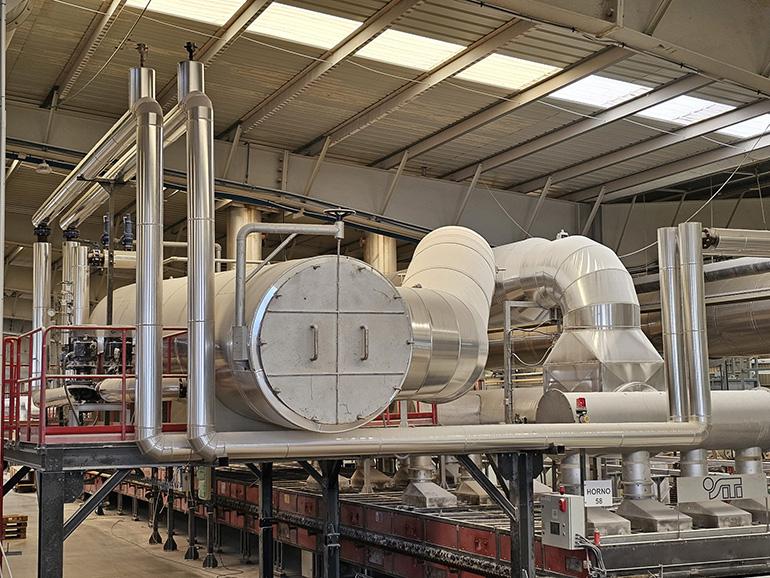
The system incorporates high-efficiency heat exchangers that capture residual thermal energy from other stages of the production process. Through intelligent flow management, the water is heated to an optimal temperature before being fed into the grinding cycle. This controlled-circuit system ensures that the recovered energy is transferred with minimal loss, maximising the thermodynamic efficiency of the entire line.
Introducing hot water into the mill not only saves energy, but also directly affects the chemical and physical properties of the slip, providing several key advantages:
- Consistent processing parameters: Maintaining stable water temperatures throughout the year ensures consistent grinding parameters, reducing the need for manual intervention and eliminating the impact of seasonal fluctuations.
- Slip optimisation: The use of hot water reduces viscosity, allowing for a lower water-to-solid ratio and reducing the water content by several percentage points while maintaining flow.
- Reduced additive consumption: A controlled temperature environment allows for a reduction in the use of deflocculant.
Sustainability and energy saving
The most immediate benefit is observed during the spray drying phase. By feeding preheated slip into the spray dryer, the thermal gradient required for evaporation is drastically reduced. This results in significant natural gas savings and a proportional reduction in CO2 emissions.
From a plant engineering perspective, the solution features wear-resistant components and integrated monitoring systems for constant supervision of the temperature set point.
This configuration offers a versatile alternative to traditional systems, requiring minimal maintenance and ensuring a more rapid return on investment.
In a market that is increasingly focused on large-format tiles, where the quality of the spray-dried powder is critical for the subsequent pressing stages, the temperature control of the milling water also plays a pivotal strategic role.

Did you find this article useful?
Join the CWW community to receive the most important news from the global ceramic industry every two weeks





Related articles






Read more