
Mineral solutions to meet the evolving challenges of world sanitaryware markets
With production and blending facilities and laboratories strategically positioned across Europe, the Middle East, and Asia-Pacific, Imerys can provide tailored solutions that combine performance, consistency and sustainability, and that meet the specific needs of customers wherever they are located.
The sanitaryware industry is undergoing a period of profound transformation. Global market dynamics, new production technologies, and ambitious sustainability targets are reshaping how ceramics producers source materials and optimize their manufacturing processes. While mature markets such as Europe and China are witnessing a slowdown in residential construction - and a corresponding dip in sanitaryware demand - manufacturers in high-growth regions such as North Africa, the Middle East, and Asia-Pacific are stepping up production to meet rising demand from new builds.
In parallel, major global sanitaryware brands are committing to unprecedented sustainability goals and sanitaryware producers over the world are under growing pressure to lower their carbon footprint. Meeting legislation and achieving these sustainability goals will require every part of the value chain - including raw material producers - to adapt and contribute to more sustainable manufacturing practices.
Meanwhile, the rise of advanced technologies such as high-pressure casting (HPC) - driven by rising labor costs and a shortage of skilled workers in many regions - further underscores the need for a reliable source of consistently high-quality mineral raw materials in order to guarantee process efficiency and product quality.
Imerys, the world’s leading supplier of mineral solutions for ceramics, is poised to help sanitaryware producers in all regions address these trends and challenges through a globally available portfolio of high-quality materials, as well as a strong local presence and dedicated technical support teams close to key ceramic clusters. Indeed, with production and blending facilities and laboratories strategically positioned across Europe, the Middle East, and Asia-Pacific, Imerys can provide tailored solutions that combine performance, consistency and sustainability to customers wherever they are located.
Supporting dynamic growth in the Middle East and Africa
The Middle East and Africa (MEA) are among the most dynamic sanitaryware markets globally, fueled by urbanization and infrastructure development and increasing demand for high-quality, design-led and more sustainable products.
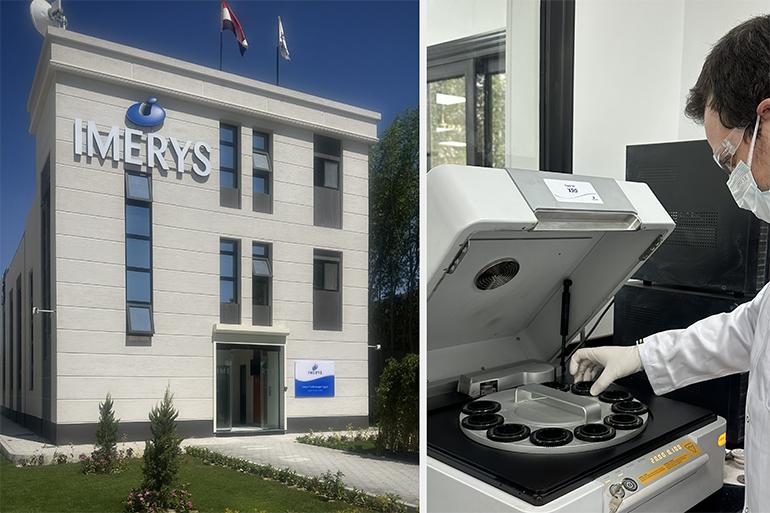
Imerys supports this regional expansion through its Imerys Ceramics Egypt (ICE) platform located in the heart of one of the country’s main ceramic clusters. The site features blending and refining operations, a dedicated laboratory and warehousing facilities, supplying customized clay, kaolin, and chamotte solutions by processing local materials with imported minerals. This flexibility allows customers across Egypt, North Africa, and the wider Middle East to access a reliable supply of consistent, high-performance products adapted to their specific requirements. In addition, Imerys’ technical support team in Egypt plays a vital role in helping customers in the region develop and fine-tune their body formulations and processes.
Key products for MEA markets feature ProxiClay and ICE Chamotte.
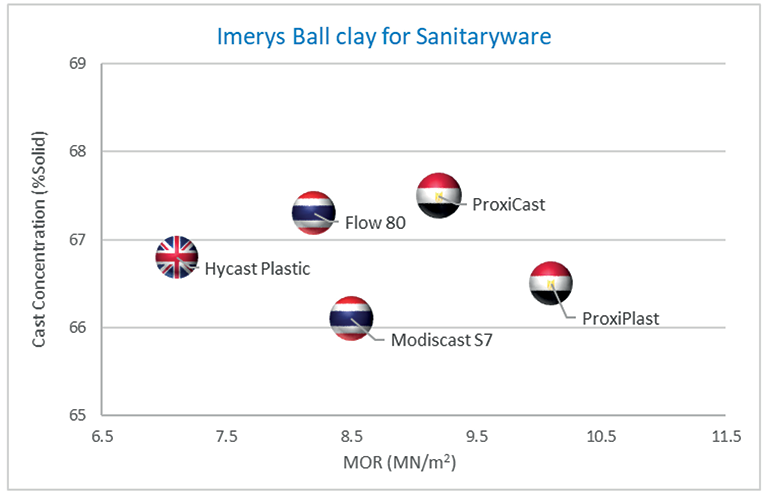
Developed in Egypt by Imerys’ regional R&D team, ProxiClay is a range of semi-refined ball clays specifically designed for the MEA market. Thanks to their low residue content, these clays minimize casting defects and provide an excellent balance between strength and fluidity. The range includes two principal grades:
- ProxiPlast, featuring a fine particle size distribution, delivers high strength, fluidity and low residue, making it ideal for producing sanitaryware pieces with good plasticity.
- ProxiCast, with a slightly coarser particle size distribution, provides firmer green strength for easier handling and shaping.
These grades enable MEA customers to achieve reliable casting performance and superior product consistency.
Also produced in Egypt, ICE Chamotte is a kaolin-based chamotte whose dilatation can be tailored to specific sanitaryware body formulations. Offering medium to high dilatation and consistent particle size distribution, ICE Chamotte guarantees stable performance.
Proxiclay and ICE Chamotte ideally complement Imerys’ ball clays from the UK and chamotte from France. Hereby, Imerys offers a comprehensive range of sanitaryware solutions, tailored to meet diverse customer needs across all locations.
Driving energy efficiency in Asia-Pacific
In Asia-Pacific, the sanitaryware industry is evolving rapidly under the combined influence of urban expansion, tightening environmental standards, and volatile energy costs. In parallel, Asian ceramics markets are witnessing an upward trend, particularly in the Super Fine Fire Clay (SFFC) segment used for sanitaryware pieces such as sinks and washbasins. Here, demand is growing for unique artistic designs, streamlined shapes, and pieces that integrate more easily with furniture.
SFFC-01B Super Fine Fire Clay from Thailand
In response to these trends, Imerys has developed SFFC-01B, a Super Fine Fire Clay new body formulation designed to lower firing temperatures while maintaining excellent mechanical properties. The product is compatible with standard sanitaryware glazes, and demonstrates better dry strength than traditional FFC bodies.
SFFC-01B meets the Asian market’s demand for low-firing bodies that can be processed at 1200°C - significantly lower than traditional Fine Fireclay (FFC) bodies, which typically require firing temperatures around 1240°C. This lower temperature enables producers to reduce energy consumption as well as to fire SFFC and vitreous china pieces together, simplifying kiln operations.
In addition to energy savings, SFFC-01B offers superior dry strength (40.1 kg/cm² versus 28.5 kg/cm² for standard FFC bodies) and improved handling and cracking tolerance of cast pieces before firing.
| Property | Vitreous China | Fine Fireclay | SFFC-01B |
| Dried strength | Medium/Good | Medium | Good |
| Deformation | High | Low | Low |
| Firing temperature | Low (1180-1200°C) | High (1240-1280°C) | Low (1200°C) |
Solutions for High-Pressure Casting (HPC)
High-pressure casting (HPC) is playing an increasingly important role in sanitaryware production worldwide, with manufacturers adopting HPC to accelerate production while maintaining consistent quality. Compared with traditional casting methods, HPC offers faster mold filling, higher casting density, reduced cycle times, and improved dimensional stability - all contributing to higher production rates and less waste. The process, however, demands high-performance raw materials with carefully controlled particle size, low residue, and consistent plasticity. To support this shift, Imerys provides a comprehensive portfolio of kaolins, ball clays, and blended solutions, designed to meet the performance requirements of HPC processes across all regions.
Kaolins for High-Pressure Casting
Imerys’ kaolin portfolio for HPC applications is available worldwide, and offers solutions tailored to different casting conditions and performance requirements.
- Remblend (UK) is the benchmark in the market for body recipes that provides an optimal balance between fluidity, dry strength and casting concentration/rate. Its high density allows manufacturers to cast at high density, giving higher yields, making it a trusted choice for sanitaryware body formulations worldwide.
- SPK (UK) is the reference for fast casting in the sanitaryware industry, with a casting rate of 11 mm²/min. Coarser and less fluid than Remblend, SPK boosts production speed in both conventional and high-pressure casting, although its lower dried strength typically requires it to be used in combination with other kaolins like Remblend.
- KaoCast ND10 (India) has been specifically designed to provide stable casting slips for vitreous china, Fine Fireclay, and HPC bodies. Its unique particle size distribution enhances slip quality, rheology and stability, allowing for easy slip transfer, superior draining and firmer casts. Kaocast ND10’s low deflocculant demand and reduced soluble salt content minimize deflocculant usage and prolong mold life, offering cost and operational advantages.
Ball Clays for High-Pressure Casting
Imerys also offers a selection of high-performance ball clays, available worldwide, that combine plasticity, fluidity and low residue for improved output and reduced waste.
- Hycast Plastic (UK) is a fine, highly plastic ball clay with low residue, ideal for HPC applications. Its excellent workability and firmer green strength reduce cracks and defects, minimizing waste and increasing yield. Low residue cuts sieve waste, while low carbon content prevents black coring and bloating. Good fluidity promotes less water use and allows for fewer chemical additives.
- ProxiCast (Egypt) is a clay with a coarse particle size distribution, which provides firmer green strength, allowing reducing the casting cycles.
- Flow80 (Thailand) is a semi-refined clay produced at Imerys’ Lampang facility, blending the refined component with UK clay to improve casting performance. Flow80 combines low carbon and residue levels with high strength and fluidity, and demonstrates performance comparable to the best UK sanitaryware clays.
Supporting sustainable manufacturing
Environmental performance has become a defining factor for the sanitaryware industry’s future. Imerys has made a firm commitment to integrating sustainability into every aspect of its business, which includes supporting its customers’ own transition to a low-carbon economy through a growing portfolio of market-driven solutions which combine innovation with sustainability. This commitment is exemplified by the recent innovations the company has developed for sanitaryware which include solutions that mitigate waste and losses, reduce energy consumption, lower CO2 emissions and extend the lifespan of the end product.
Modiscast S7 for faster firing and less waste
Developed in Thailand and launched in 2024, Modiscast S7 is a wet-refined ball clay that exemplifies Imerys’ commitment to circular resource use. The innovative wet-refining process allows the site to recover previously non-valorized material - a major step forward in circular resource use. Designed for sanitaryware production, Modiscast S7 enables manufacturers to achieve faster firing cycles and lower defect rates in sanitaryware production. Presenting a high alumina and low carbon content, Modiscast S7 reduces the risk of surface defects, minimizing waste from rejected pieces. Produced through wet-refining, Modiscast S7 demonstrates lower levels of contaminants and soluble salts, enhancing consistency and workability.
Wollastonite for energy-efficient glazes
Imerys’ Nyad M200 and M325 wollastonite grades are sustainable alternatives to calcium carbonate and silica in sanitaryware glazes where they enhance surface finish and reduce CO₂ emissions. With very low organic content and loss on ignition, Imerys wollastonites for sanitaryware minimize the risk of pinholes and confer superior glaze performance.
Sustainable kiln furniture for waste reductions and lightweighting
Imerys also offers a portfolio of sustainable kiln furniture solutions that contribute directly to waste reduction and energy savings.
The ShrinkSan™ kiln furniture system is a sustainable alternative to disposable ceramic plates used to control shrinkage during the firing of sanitaryware products such as toilet bowls. The patented solution can be used over 800 times, avoiding an estimated three tonnes of waste (for 1,000 toilets) going to landfill. A full life-cycle analysis (LCA) of ShrinkSan™, conducted in 2021 by PwC, concludes that the total impact of using ShrinkSan™ is four times lower than that of disposable plates and that the system reduces the overall CO₂ footprint of toilet production by 6%. By minimizing friction between the piece and the kiln support during firing, ShrinkSan™ also enables manufacturers to produce thinner, lighter sanitaryware pieces, reducing both overall weight and raw material consumption. Today, major sanitaryware producers in Europe have adopted ShrinkSan™ and continue to rely on the system - available on a rental basis - recognizing its long-term performance and environmental benefits.
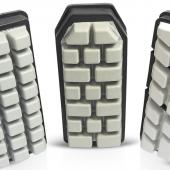
Another sustainable solution is Imerys’ lightweight extruded batt system which allows manufacturers to lower overall firing batch weight without compromising performance. These cordierite batts support the same number of pieces but weigh 17% less than a standard batt system.
A partner of choice for sanitaryware producers worldwide
From the processing facilities of Egypt to the R&D labs of Thailand and the production sites in Europe and India, Imerys’ global network ensures the availability of consistent quality raw materials, technical expertise, and responsive customer service wherever sanitaryware is made.
By combining local presence with global know-how, and by continuously investing in sustainable innovation, Imerys is empowering sanitaryware manufacturers to meet today’s challenges - from production efficiency and performance to carbon reduction and circularity - while preparing for a more responsible, sustainable future.

Did you find this article useful?
Join the CWW community to receive the most important news from the global ceramic industry every two weeks









Read more